


CATEGORIES
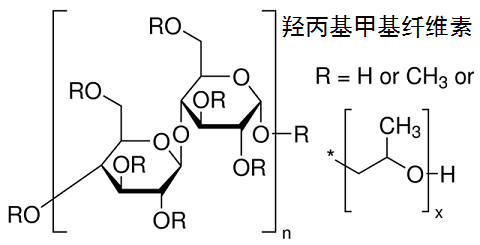
Hydroxypropyl methyl cellulose
English Name: Hydroxypropyl methyl cellulose
Chinese Name: hydroxypropyl methyl cellulose
MF: C3H7O*
MW: 59.08708
CAS: 9004-65-3




Hydroxypropyl methylcellulose is a propylene glycol ether of methylcellulose, in which the hydroxypropyl and methyl groups are linked to the anhydrous glucose ring of cellulose via ether bonds. It is a white to off-white cellulose powder or granules, exhibiting properties similar to methylcellulose: solubility in cold water and insolubility in hot water. Its solubility in organic solvents is better than its water solubility; it is soluble in anhydrous methanol and ethanol solutions, as well as in chlorinated hydrocarbons and ketones. It is soluble in water, and its aqueous solution exhibits surface activity, forming a thin film upon drying. Upon heating and cooling, it undergoes a reversible transformation from sol to gel. In cold drinks, it can be used alone or in combination with other emulsifiers and stabilizers, with a maximum usage of 1%. In recent years, it has been widely used in the petrochemical, paper, leather, textile printing and dyeing, pharmaceutical, food, and cosmetic industries as a dispersant, thickener, adhesive, excipient, capsule, oil-resistant coating, and filler.
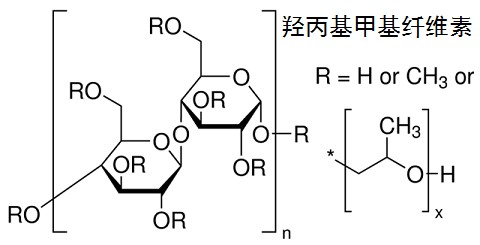
Figure 1 shows the molecular structure of hydroxypropyl methylcellulose.
Usage Method
Purpose: Thickener, emulsifier, stabilizer.
1. Precautions for use: Hydroxypropyl methylcellulose has a variety of excellent properties and can be used in baked goods, paste foods, nutritional foods, milk-stirred beverages, pies, fillings, salad toppings, and fast food. Its thermogelling properties can be used to manufacture fried foods, saving a significant amount of frying oil and producing products with a unique crispy exterior and soft interior. Its chemical book characteristics, such as stability against acids and alkalis, enzyme resistance, non-participation in metabolism, and enhanced gastrointestinal motility, also make it suitable for manufacturing various health foods.
2. Scope of use and dosage:
(1) According to my country's "Hygienic Standard for the Use of Food Additives" (GB2760-1996), it can be used in various foods in appropriate amounts as needed for production.
(2) Actual usage reference: Utilizing its film-forming properties and high film transmittance, it can be used to manufacture protein casings at a dosage of 5%; it can also be used as a thickener for mayonnaise (HPMC-60RT400) at a dosage of 0.5% to 2%.
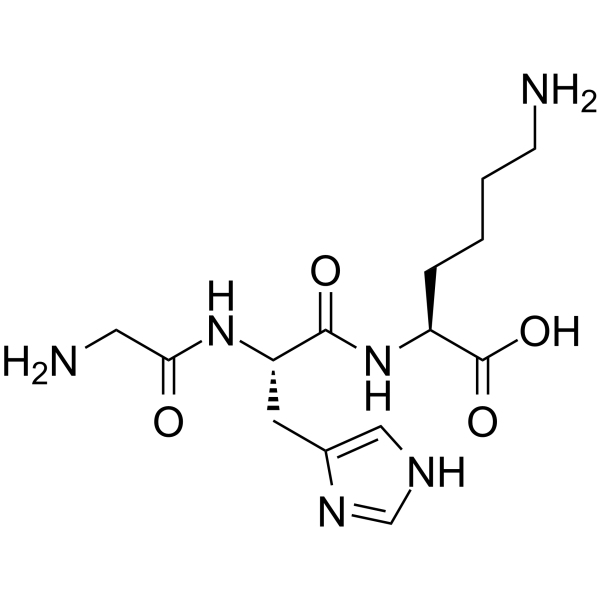
 Copper tripeptide
 SLU-PP-332
 Copper Peptide
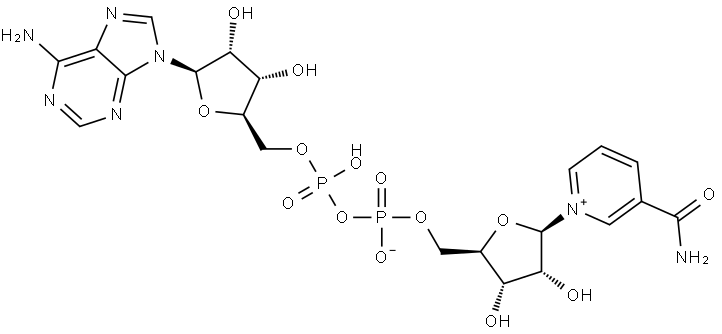
 β-Nicotinamide adenine dinucleotide
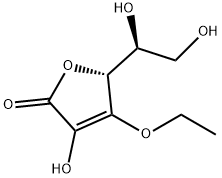
 3-O-Ethyl-L-ascorbic acid
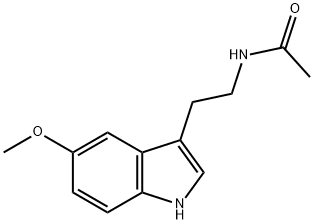
 Melatonine
 AHK-Cu
 peptides
 Acetyl hexapeptide 38
 (human)") Amyloid β-Peptide (1-42) (human)
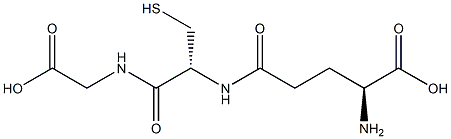
Amyloid β-Peptide (1-42) (human) Glutathione
 DEOXYRIBONUCLEIC ACID


CONTACT US
Please use the form below to get in touch.
If you need a reply we will get in touch as soon as possible.